Table of contents
Thanksgiving is one of America’s heaviest travel weeks. Traffic spikes the Wednesday before and the Sunday after the holiday. These patterns repeat year after year. That volume alone raises crash risk, and late-night drinking on “Thanksgiving Eve” adds another layer for families driving after dinner or airport pickups. And “holiday traffic isn’t just annoying, but measurably riskier.
Thanksgiving Traffic Risk In Numbers
Holiday traffic isn’t just stressful. These quick stats show what changes during Thanksgiving week, so you can plan with clear eyes and avoid the traps that hurt the most families.
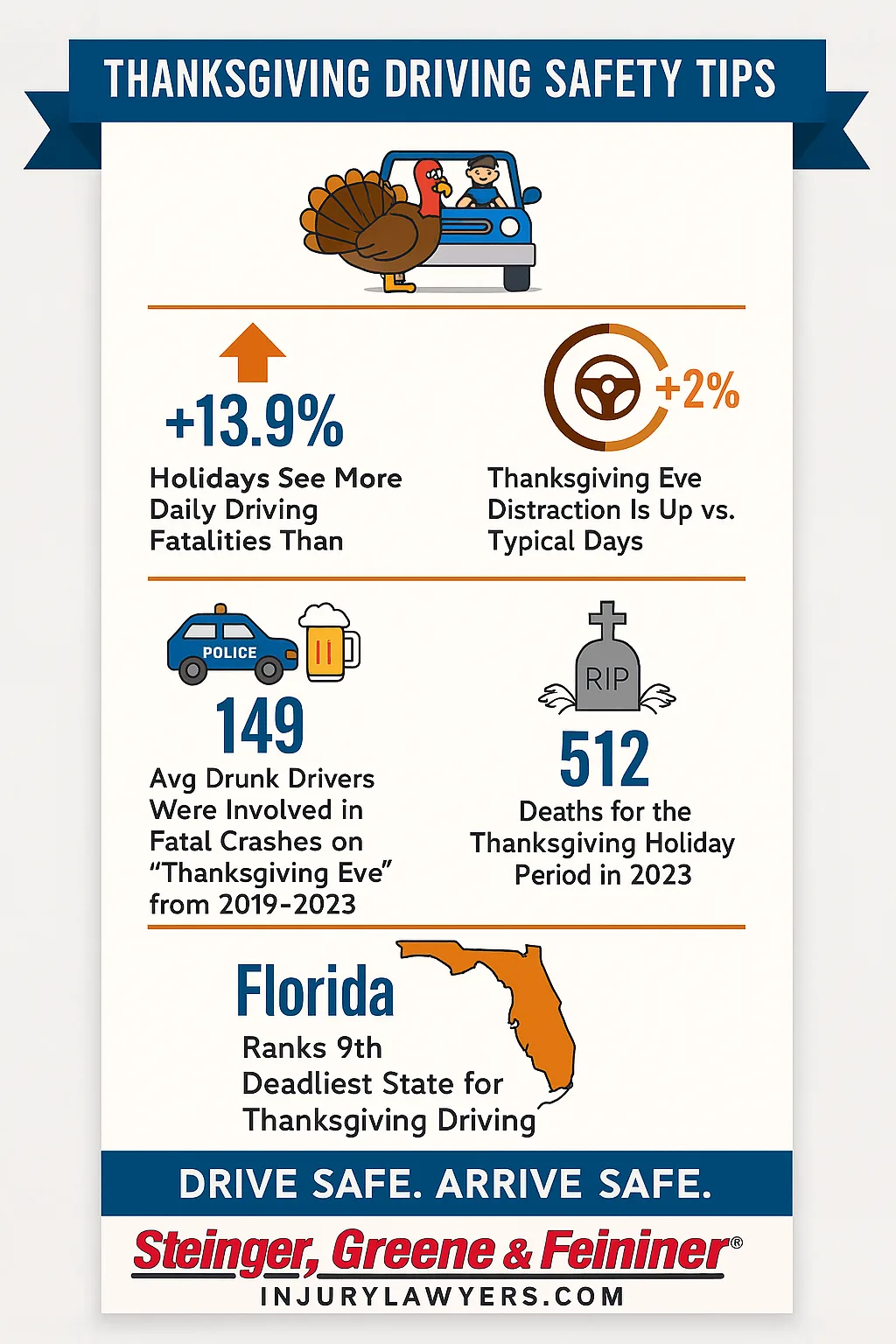
- 13.9% more daily driving fatalities on holidays vs. regular days, nationwide, according to the ValuePenguin study.
- Over 500 fatalities during Thanksgiving in 2023: The National Safety Council (NSC) counted 512 fatalities in car crashes during the “Thanksgiving period” in 2023.
- “Thanksgiving Eve” drinking: From 2019–2023, 149 drunk drivers were involved in fatal crashes just between 6 p.m. Wednesday and 5:59 a.m., according to the NHTSA data. Thu. In 2023 alone, there were 30 drunk drivers, 17 of them male; the 21–24 group was most likely to be alcohol-impaired, followed by 25–34 group.
- Distraction doesn’t disappear: Thanksgiving Eve distraction is 2% up vs. typical days.
- Florida ranks 9th deadliest state for Thanksgiving driving, with 1.5 fatalities per 1M residents on average.
- Average 114 car crash deaths a day for the “Thanksgiving period” for the last years, with Wednesday as the deadliest day to drive
If reading that makes you anxious, you’re not alone. The goal below is simple: lower your odds and know actions you can take before you even leave the driveway.
Before You Roll: Prep That Actually Prevents Crashes
A little prep pays off on the road. Do these simple things before you leave, and you’ll cut the most common holiday-week risks in half.
- Give your car a fast, real check.
Tires (tread + pressure), fluids, wipers, lights, brakes. ABS behaves differently on ice, so practice in an empty lot to learn how it feels before you’re on a pass. Check tread depth and carry chains or traction mats if you’re crossing mountain passes. If you’re due soon for pads or oil, do it now. - Check the weather and elevation together:
Conditions can change fast between valleys and summits. Always check mountain pass forecasts before leaving. - Print your route.
Phones die or lose signal. Paper directions keep you moving without staring at a screen during the heaviest traffic. - Pack an honest emergency kit.
Jumper cables, triangle/flares, tire tools + spare, power bank, first-aid kit, blankets, snacks, and water. Include sand or kitty litter for traction if you slide off or get stuck. - Share your plan.
Tell someone your route and ETA. Ask a neighbor to keep an eye on the house. - Sleep and fuel.
A full night’s sleep reduces mistakes as much as skipping a drink would. Eat before you go so you’re not juggling food in traffic.
On The Road: Habits That Cut Real Risk
Once you’re moving, small choices also make the biggest difference. Use these on-the-road habits to buy yourself space, time, and a safer buffer from everyone else’s mistakes.
- Drive defensively. Stay alert and scan 12–15 seconds ahead. Obey speed limits and right-of-way rules. Expect mistakes: if a driver looks ready to run a light or drift lanes, be ready to slow or stop. In rain, fog, or congestion, add following distance.
- If driving at night: Stick to well-lit fuel stops, lock doors, and park where you can drive straight out. Avoid stopping for strangers. Call 911 if someone looks in distress. If possible, plan long drives for daylight hours.
- Go distraction-free. Phone away or locked in a hands-free mount for navigation only. Let passengers handle calls/texts and address changes. New route or driving at night? Double the focus—eyes up, mind on driving.
- Avoid cruise control on slippery roads.
- Watch the weather and traffic, and have a Plan B. Storms, wrecks, and closures happen. Check live conditions, pick an alternate route, and detour if you need to.
- Respect fatigue and impairment. Get a full night’s sleep; fatigue can mimic DUI at highway speeds. Do not drink and drive—set a sober ride before dinner. If you’re tired, pull off and rest. Remember: “Thanksgiving Eve” DUI risk is well-documented (see the 149 drunk drivers involved in fatal crashes across 2019–2023).
Roads behave differently in each state. Weather, enforcement, and terrain all change the playbook.
Drive Time: State-Specific Tips That Match Real Conditions
Florida: rain, tourists, work zones
- Holiday surge. Expect crash upticks and FHP saturation on interstates and popular tourist routes during Thanksgiving week.
- Wet-road mindset. Most weather-related crashes happen on wet pavement or in rain. When showers start, roll off the throttle, brake gently, and leave more space.
- Phone rules. Florida bans texting while driving statewide and handheld use in school and work zones; it’s primary enforcement. Go true hands-free or hand the phone to a passenger.
Tennessee: black ice, hills, sudden weather swings
- Black-ice watch. Bridges and shaded curves can glaze over at night and dawn. If temps dip, slow sooner than you think and keep steering/braking smooth. “In ice and snow: take it slow.”
- Hands-free is law. Same as in Florida, no phone in hand (Public Chapter 412). Set nav before you roll.
- Know your route. Hilly terrain and weather can stack risks fast. Tennessee posts crash dashboards by county and route if you want the local picture.
Texas: long rural gaps, high speeds, “End The Streak”
- Plan fuel and daylight. Rural stretches, dusk wildlife, and higher speeds increase severity. Don’t push through fatigue; stop and reset.
- Texting is banned statewide. Stay hands-free; school-zone rules are tighter.
- Every choice matters. TxDOT’s “End The Streak” reminds us Texas hasn’t had a death-free day on the roads in decades. Buckle up, manage speed, and keep your eyes up.
- Finally, let’s sum up with the most helpful tips.
Holiday Traffic Playbook
Here’s the whole game plan on one screen. Screenshot it now so you’ve got the essentials handy when the roads get crowded and plans change.
- Travel earlier in the week if you can; Wednesday is the peak outbound day, and Sunday is the peak return day. Leave very early (3–5 a.m.) or late evening (after 9 p.m.) to miss peak congestion on Tuesday/Wednesday.
- Check weather and traffic, pick a backup route, and be willing to detour.
- Double your following distance in rain, fog, or heavy traffic.
- No phone in hand. Make a passenger the “phone captain.”
- Buckle everyone, every mile. Use the correct child seat.
- Don’t drink and drive. Arrange the sober ride before dinner.
- If you’re tired, pull off. Fatigue crashes look a lot like DUI at highway speed.
Even with your best efforts, someone else’s mistake can still find you. If that happens, these steps protect your health and your claim.
If Someone Hits You: Do These 6 Things
Crashes can still happen even when you do everything right. Follow these steps in order to protect your health first, and your claim right behind it.
- Call 911 and get police on scene, even if damage looks “minor.” You want an independent report and medical documentation starting Day 1 (this protects you later).
- Check injuries and move to a safer spot if you can.
- Swap info and photograph everything: vehicles, plates, road, skid marks, signs, weather, and your injuries.
- Speak in facts. Don’t guess, apologize, or argue.
- Get medical care today and follow through. Your health comes first—and timely records drive most of a claim’s value.
- Don’t give a recorded statement or sign medical releases for any insurer before you talk to a lawyer. Quick “holiday settlement” calls are common; they rarely help you.
You don’t have to battle adjusters while you’re hurting. Call us first, and we’ll deal with them while you focus on healing.
Need Help After A Holiday Crash?
We handle car, truck, and motorcycle cases across Florida with offices in West Palm Beach, Miami, Fort Lauderdale, Tampa, Fort Myers, Port St. Lucie, and more, Tennessee, and Texas. You can reach us 24/7. No upfront fees, you don’t pay unless we win. If you were hurt, talk to us before you talk to the insurance company. We’ll deal with them while you take care of your family.