If someone witnessed your car accident, their testimony may help you win your personal injury case. Car accident witnesses are a great tool that can be used to prove what really happened. Knowing what to do after a car accident, like finding witnesses, can be a great way to ensure you get the compensation you deserve.
Most car accidents have witnesses; the trouble is getting them to make a statement with the police and follow up with your lawyer. Also, how are you supposed to ask someone about the car accident? It may seem odd to ask a stranger to be a witness on your behalf. But we recommend finding as many witnesses who saw the car accident and can prove your side of the story.
How Do I Find People Who Witnessed a Car Accident?

So where are you supposed to find car accident witnesses? If you have had an accident in a busy intersection or near a busy plaza, you will have an easier time finding a witness and convincing one of the witnesses to give their statement to the police. Also, remember that your passenger or the other driver’s passenger is a witness as well!
Speak with people at the scene
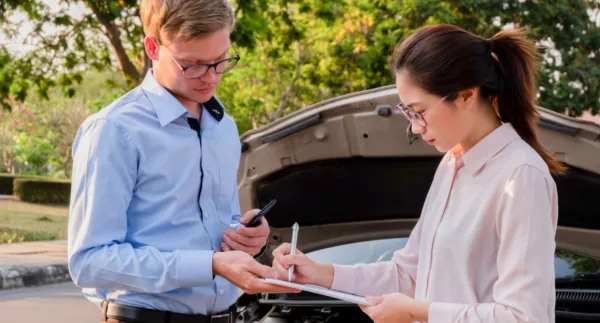
If you can speak to anyone around the scene, then try to speak with these possible witnesses as soon as possible. An eye witness account can be as valuable as taking pictures and collecting the other driver’s information.
Return to the accident scene later
If you were unable to question any witnesses at the scene after your car accident, then you could return to the scene later. Look for businesses in the area directly surrounding the scene of the accident. Gas stations, grocery stores, convenience stores, and any other businesses, may have employees or business owners who saw the accident take place and can be valuable witnesses.
Check the police report
Not only can you find the information of potential car accident witnesses that were interviewed by police after your collision, but you may be able to follow up with these bystanders directly. You can also ask to change the police report after an accident if you have some factual issues with statements.
Remember that almost anyone can be a witness. It can be people at the scene, it can be passengers in cars, it can be people who were with drivers who gave witness statements to the police. Knowing what to do after a hit-and-run accident and how to ask witnesses, is just as important.
How Do You Ask Someone to Be A Witness After A Car Accident?
If you are having trouble asking a bystander to a be witness and go on record, don’t be! Most people are more than happy to lend a hand and offer their account of car accident. Bystanders are often chomping at the bit to be a part of the proceedings.
You must speak with car accident witnesses because your lawsuit victory will depend on proving the other driver was at fault.
If a potential witness tells you they do not have time to give a statement, they can give a statement later. But proceed with caution! Witness statements are more accurate when they are given and taken right after the accident. Most car accident victims will give less reliable testimony as more time passes.
Right Questions to ask a Car Accident witness
Right after a crash, it can feel like you are the only one who knows what really happened. In many wrecks, though, someone else saw more than you realize. A good witness can tip the scales in your favor. The way you talk to that person and the questions you ask can make a real difference in your Florida car accident claim.
Also, if the witness agrees, you can write quick notes in your phone, ask them to text you what they remember, or use a voice memo app so you do not forget the details they share.
If you feel safe and you are able to speak with a witness, these are the five key areas to cover.
1. What did you see?
Start simple and open-ended. Let the witness talk in their own words before you jump in with extra questions. You can say something like: “Can you tell me what you saw? Please start at the beginning.” Once they finish, you can gently follow up with more focused questions:
- When did you first notice the vehicles? Did you see them before the impact, or only when you heard the crash?
- Where were you standing or driving? Were you in another car, on the sidewalk, in a nearby business, or in a parking lot?
- What lane was each vehicle in? For example, was my car in the right lane and the other car in the left lane, or the other way around?
- Did you see any braking, swerving, or turn signals? Did either driver slow down, change lanes suddenly, or swerve before the impact?
These details help us later when we line up the story with skid marks, vehicle damage, and the crash location.
2. How did the crash happen, and what was the scene like?
Next, get a picture of the road and conditions around the crash. This paints the backdrop that insurance companies and juries need. You might ask:
- Can you describe the road and traffic? Was the traffic light, moderate or heavy?
- Did you notice any traffic lights, stop signs, or crosswalks? Could you see whether anyone ran a red light, rolled through a stop sign, or ignored a yield sign?
- Did weather or road conditions play a role?
- Were there any obstacles or hazards? For example, parked cars, debris, or blocked views at the intersection.
These questions help us understand how the crash occurred, not just that two cars collided. They also help answer key questions about weather conditions, visibility, and road layout that often come up in negotiations.
3. Did you notice any dangerous driving or law-breaking?
Once you know what the witness saw in general, it is time to zoom in on behavior. This part can be crucial when we need to prove fault. You can ask:
- Did you notice anyone driving aggressively or recklessly? Tailgating, cutting off other cars, weaving between lanes, or speeding through traffic.
- Was one driver speeding? Even a rough impression is helpful, such as “they were going much faster than the other cars.”
- Did you see anyone use their phone or look distracted? Looking down at a screen, holding a phone to their ear, turning around to talk to a passenger, or reaching for something.
- Did any vehicle move erratically? Sudden lane changes, late braking, drifting over the center line, or swerving without clear reason.
- Did you notice any signs that a driver ran a red light or stop sign?
You do not need the witness to guess the exact speed or quote the law. We want plain, simple observations. We can connect those dots to traffic rules and Florida statutes later.
4. What happened right after the impact?
What happens in the moments after a crash often says a lot about fault, injuries, and credibility. Many drivers forget these details; witnesses may sometimes remember them clearly. You can ask:
- What did you see immediately after the crash? Did any car spin, roll, or end up in a strange position? Did airbags deploy?
- Did the parties exit their vehicles? Who got out first? Did anyone have trouble walking, collapse, or seem dazed or injured?
- Did anyone apologize or admit fault? For example: “I am so sorry, I did not see you,” or “I ran that light.”
- Did you hear anything the other driver or their passengers said? Anger, blame, apologies, or talk about drinking, texting, or being late can all matter later.
- Did you see anyone leave the scene? This can be important in hit-and-run cases or when a driver flees before police arrive.
- What did you do right after the accident? Did they call 911, help move vehicles, or talk to police at the scene?
These details can give us insight into how people behaved, how hurt they were, and whether anyone tried to cover up what they did.
5. Can we stay in touch about what you saw?
Finally, you need a way to reach the witness again. This step is often overlooked in the chaos, but it is critical. Ask for their contact information, including:
- Full name. First and last name, spelled correctly.
- Phone number and email address. Ask which is the best way to reach them and what times of day are easiest.
- Mailing address, if they are comfortable sharing it. This can help later if formal statements or subpoenas are needed.
Take a quick photo of their business card, driver’s license (if they agree), or have them text their full name and contact info to your phone. This avoids mistakes in spelling or numbers.
What To Do With Witness Information After You Collect It
Once you have spoken with a witness and written down what they shared, the next step is to protect and use that information correctly.
- Save everything in one place.
Keep screenshots, notes, and voice memos together. Do not edit or rewrite what they said in a way that changes the meaning. - Tell your lawyer about every witness.
Share names, contact details, and what each person saw. A good car accident attorney knows how to follow up, request formal statements, and decide which witnesses should be approached first. - Avoid coaching or rehearsing.
Do not tell a witness what to say. Encourage them to be honest and to share what they remember, even if it is not perfect. - Be careful talking to insurance companies.
Before you share detailed witness information with an adjuster, talk to a lawyer. The way you describe a witness and what they saw can impact how the insurance company treats your claim.
At Steinger, Greene & Feiner, we have helped thousands of clients across Florida use witness testimony to prove what really happened on the road. From West Palm Beach, Miami, Fort Lauderdale, Tampa, Port St. Lucie, and more, Tennessee, and Texas, our team knows what questions to ask, how to track down additional witnesses, and how to present their statements so insurance companies and juries take them seriously.
If you were in a crash and you are not sure what to do with the information you collected, or you did not get the chance to talk to witnesses at all, reach out to us. We offer free consultation, and can review your situation, explain your options, and help you build the strongest case possible.